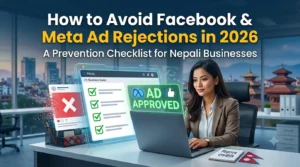
Summary: This blog explains how advertisers can avoid Meta ad rejection by following rules around misleading claims and personal attributes. It shows why ads get rejected, what words or claims to avoid, how to write safer ad copy, and why landing pages must also be transparent and trustworthy.
Key Takeaways
- Avoid exaggerated claims like guaranteed results, instant income, or fast weight loss.
- Don’t imply personal details about users, such as health, money problems, body image, or relationship status.
- Use benefit-focused wording instead of fear-based or shame-based copy.
- Meta may review your ad copy, creative, targeting, and landing page.
- Keep landing pages clear with contact details, privacy policy, real offers, and no fake urgency.
- Best practice: write ads that are honest, respectful, realistic, and policy-safe.
Running ads on Facebook and Instagram can be one of the fastest ways to reach new customers, generate leads, and grow your business. But for many advertisers, one frustrating problem keeps coming back: Meta ads getting rejected.
Sometimes your ad looks normal to you, but Meta still disapproves it. Other times, the ad runs for a few hours or days and then suddenly stops. In many cases, the reason is connected to Meta’s advertising rules around misleading claims and personal attributes.
Meta’s advertising policies, also known as Meta Ad Standards or Facebook advertising guidelines, are designed to keep ads safe, transparent, and respectful for users across platforms like Facebook, Instagram, Messenger, and other Meta placements. These policies cover ad copy, images, videos, targeting, landing pages, business behavior, and the overall user experience.
For advertisers, this means one important thing: your ad is not judged only by how attractive it looks. Meta also checks whether your message is truthful, whether your claims are realistic, whether your landing page is trustworthy, and whether your ad wording makes uncomfortable assumptions about the person seeing it. Meta’s ad review process can include text, image, video, targeting, and destination or landing page review.
In this guide, we will explain Meta Ads misleading claims and personal attributes policy in simple language. You will learn what these policies mean, why Facebook ads get rejected, which words and claims to avoid, and how to write safer ad copy that still converts.
1. What Are Meta Advertising Policies?
Meta Advertising Policies are the rules that decide what advertisers can and cannot promote on Meta platforms. These policies apply to ads running across Facebook, Instagram, Messenger, Audience Network, and other Meta technologies. Meta requires advertisers to follow its Advertising Standards, and ads must also comply with Facebook Community Standards and Instagram Community Guidelines where applicable.
The goal of these policies is to protect users from harmful, deceptive, discriminatory, or low-quality advertising experiences. Meta’s policies are not limited to prohibited products. They also include rules about how advertisers write ad copy, what kind of claims they make, what images they use, how they target people, and what experience users get after clicking the ad.
For example, an ad may be rejected if it promotes a prohibited product, uses shocking content, makes false claims, includes fake buttons, uses unrealistic before-and-after results, or sends users to a low-quality landing page. Ads may also be rejected if the wording directly or indirectly implies that the advertiser knows sensitive personal information about the viewer.
This is why many advertisers feel confused. They may think, “My product is legal, so why was my ad rejected?” But Meta’s review does not only ask whether the product is legal. It also asks whether the ad is honest, respectful, transparent, and safe for the user experience.
2. Why Meta Has Strict Ad Policies
Meta has strict ad policies because billions of people use its platforms. If misleading or offensive ads spread widely, facebookusers may lose trust in the platform. Meta’s advertising guidelines are designed to reduce harmful content, protect privacy, prevent scams, and create a safer advertising ecosystem.
For businesses, this creates both a challenge and an opportunity. The challenge is that you must be careful with your ad wording and landing pages. The opportunity is that compliant ads can create more trust with your audience, reduce rejection issues, and improve long-term account health.
3. What Happens If You Violate Meta Ad Policies?
If your ad violates Meta policies, it may be rejected before it starts running. In some cases, ads may also be reviewed again after they are live. Meta’s review process mainly uses automated systems, but human review may also be used in some cases.
Repeated violations may lead to bigger problems, such as limited ad delivery, disabled ads, restricted ad accounts, restricted business assets, or loss of advertiser trust. Meta may also monitor advertiser behavior beyond individual ads, including business assets such as Pages, ad accounts, and user accounts.
That is why understanding misleading claims and personal attributes policy is important before launching campaigns.
4. What Are Misleading Claims in Meta Ads?
Misleading claims are statements, visuals, offers, or messages that may deceive users or create unrealistic expectations. These claims can appear in your ad copy, headline, image text, video script, testimonial, offer, call-to-action, or landing page.
A misleading claim does not always mean the advertiser is intentionally lying. Sometimes advertisers use aggressive marketing language because they want attention. But even if the product is genuine, Meta may reject the ad if the claim sounds exaggerated, unverifiable, deceptive, or too good to be true.
Examples of misleading claims include:
- “Lose 10 kg in 7 days”
- “Earn $5,000 this week with no skills”
- “Guaranteed 500% return”
- “This treatment removes acne permanently”
- “Only 2 seats left” when the offer is not actually limited
- “Officially approved by Meta” when it is not true
- Fake testimonials or fake reviews
- Before-and-after images showing unrealistic results
Meta’s unacceptable business practices policy is often discussed in relation to misleading or deceptive offers. Ads should not promote products, services, schemes, or offers using deceptive or misleading practices, especially those intended to take money or personal information from people unfairly.
Misleading claims can also exist outside the ad itself. Your landing page can create a problem if it has unclear pricing, missing refund policy, fake countdown timers, fake reviews, broken buttons, or claims that do not match the ad. Meta can review the destination or landing page as part of the ad review process.
Bad Example
Lose 10 kg in 7 days without exercise or diet.
This is risky because it promises a dramatic health result in a short time. It may be considered unrealistic or misleading.
Better Example
Explore practical fitness and nutrition guidance designed to support your weight-management journey.
This is safer because it uses educational language and does not promise an extreme result.
Bad Example
Guaranteed 500% return on your investment in 30 days.
This is risky because financial results cannot usually be guaranteed, and exaggerated investment claims are sensitive.
Better Example
Learn practical strategies to understand digital advertising performance and manage campaign risk.
This is safer because it does not promise guaranteed profit.
Gripas Marketing helps businesses create compliant, conversion-focused Meta ad campaigns that follow advertising policies and drive better results.
Get Free Audit5. Common Types of Misleading Claims That Get Meta Ads Rejected
Many advertisers make similar mistakes when writing ad copy. Below are the most common misleading claim types that may trigger ad rejection.
1. Unrealistic Result Claims
Unrealistic result claims are one of the biggest reasons ads get rejected. These claims promise results that sound extreme, instant, or guaranteed.
Examples include:
Get rich in 7 days.
Remove all dark spots overnight.
Lose belly fat without diet or exercise.
Get 100 guaranteed leads every day.
These claims create unrealistic expectations. Even if your service is good, you should avoid promising guaranteed outcomes unless you have clear proof and the claim complies with relevant laws and Meta policies.
A better approach is to focus on process, education, support, or potential benefits.
Better examples:
Learn proven methods to improve your lead generation strategy.
Discover skincare routines designed to support healthier-looking skin.
Start your fitness journey with structured workout and nutrition guidance.
2. Before-and-After Claims
Before-and-after images can be risky, especially in industries like weight loss, skincare, hair treatment, cosmetic procedures, supplements, and fitness. Some advertising policy summaries list before-and-after style results and unrealistic transformation visuals as common issues that can trigger rejection.
For example:
Before: overweight and unhappy.
After: slim in 14 days.
This type of ad may be rejected because it implies unrealistic results and may create negative self-perception.
A safer alternative:
Explore a guided fitness program designed to help you build consistent healthy habits.
Instead of showing extreme transformation, show product use, lifestyle context, educational content, or realistic service benefits.
3. Fake Scarcity or False Urgency
Urgency can improve conversions, but fake urgency can create policy risk. If you say “Only 2 spots left” or “Offer ends tonight,” it should be true. If the same offer runs every day with the same timer, it may look deceptive.
Risky examples:
Only 3 seats left. Register now before midnight.
This offer disappears forever tonight.
Better examples:
Registration is open for our upcoming training batch.
Book a consultation this week to discuss your campaign goals.
If you use deadlines, make sure they are real.
4. Unsupported Testimonials
Testimonials can be powerful, but they must be genuine and not misleading. Fake reviews, exaggerated customer stories, or unverifiable claims can create trust and compliance issues. Sources discussing Meta policy risks commonly mention fake reviews, non-verified testimonials, and exaggerated claims as problematic signals.
Risky example:
“I earned Rs. 5 lakh in one month using this course.”
If this is not typical, not verified, or presented without context, it can mislead users.
Better example:
“Our students learn practical digital marketing concepts through guided lessons and real campaign examples.”
If using testimonials, keep them real, specific, and balanced. Add disclaimers where needed.
5. Misleading Landing Pages
Sometimes your ad copy is acceptable, but your landing page causes the rejection. Meta’s review may include the ad destination, not just the ad creative.
Landing page problems may include:
- Missing privacy policy
- Missing contact details
- Unclear pricing
- Fake countdown timers
- Broken links or fake buttons
- Different offer from the ad
- Claims that are stronger than the ad
- Fake reviews
- No refund or terms information
- Poor mobile experience
If your ad says “Free consultation,” but the landing page asks for payment without explanation, that mismatch can look misleading. If your ad promotes a service, but the page has no business identity or contact details, it may look low-trust.
6. What Is Meta’s Personal Attributes Policy?
Meta’s Personal Attributes Policy restricts ads from directly or indirectly asserting or implying personal attributes about the person seeing the ad. In simple words, your ad should not make users feel like you know sensitive personal details about them.
Personal attributes may include race, ethnicity, religion, beliefs, age, sexual orientation, gender identity, disability, physical or mental health, medical conditions, vulnerable financial status, voting status, trade union membership, criminal record, or name.
This policy is very important because many advertisers write ads in a direct-response style using phrases like:
Are you struggling with debt?
Do you have anxiety?
Are you overweight?
Single and lonely?
These lines may look normal from a marketing perspective, but they can be risky because they imply the advertiser knows something personal about the viewer.
Meta generally wants ads to focus on the product or service benefit rather than making assumptions about the user’s identity, condition, financial situation, health, or private life.
Why Personal Attribute Wording Is Risky
The issue is not only the topic. The issue is how the ad is framed.
For example, a mental wellness app may be allowed to advertise educational resources. But the wording should not say:
Are you depressed?
That directly suggests the viewer has a mental health condition.
A safer version would be:
Explore resources designed to support mental wellness and daily balance.
The difference is simple:
- Risky copy focuses on the viewer’s personal condition.
- Safer copy focuses on the product, benefit, or general topic.
7. Examples of Personal Attributes Policy Violations
Below are practical examples you can use when writing Meta ad copy.
Health-Related Example
Avoid:
Are you suffering from anxiety?
Why it is risky:
It implies the viewer may have a mental health condition.
Better:
Explore resources designed to support calm, focus, and mental wellness.
This is safer because it talks about the benefit without diagnosing the viewer.
Financial Status Example
Avoid:
Are you struggling with debt?
Why it is risky:
It implies the viewer has a vulnerable financial status.
Better:
Learn practical tips for planning your budget and managing personal finances.
This is educational and does not assume financial hardship.
Body Image Example
Avoid:
Embarrassed by your weight?
Why it is risky:
It targets a sensitive physical attribute and may create negative self-perception.
Better:
Discover fitness guidance designed to support a healthier and more active lifestyle.
This focuses on positive outcomes.
Relationship Status Example
Avoid:
Single and lonely?
Why it is risky:
It assumes relationship status and emotional condition.
Better:
Meet new people through meaningful social experiences.
This focuses on the service benefit.
Employment Example
Avoid:
Unemployed and desperate for work?
Why it is risky:
It assumes employment status and emotional vulnerability.
Better:
Explore career resources and training opportunities to build practical skills.
This sounds supportive and professional.
Religion or Belief Example
Avoid:
As a Hindu, are you looking for financial guidance?
Why it is risky:
It directly references religion as a personal attribute.
Better:
Explore financial planning guidance designed for individuals and families.
This avoids sensitive personal identification.
8. Misleading Claims vs Personal Attributes: What Is the Difference?
Why it is risky:
Misleading claims and personal attributes are different policy issues, but they often appear together.
A misleading claim is about the promise you make. It becomes risky when the claim is false, exaggerated, unrealistic, deceptive, or unsupported.
A personal attributes violation is about what your ad implies about the person seeing it. It becomes risky when the ad suggests that you know the viewer’s health, financial status, identity, relationship status, belief, or other sensitive personal detail.
Here is an example that may violate both:
Overweight and tired of being ignored? Lose 15 kg in 10 days with our secret formula.
- “Overweight” implies a personal attribute.
- “Tired of being ignored” targets insecurity.
- “Lose 15 kg in 10 days” is an unrealistic result claim.
- “Secret formula” may sound deceptive if not clearly explained.
A safer version:
Build healthier habits with guided fitness and nutrition support designed for long-term progress.
This version avoids personal assumptions and unrealistic promises.
Another risky example:
Broke and rejected by banks? Get guaranteed loan approval today.
Why it is risky:
- “Broke” implies vulnerable financial status.
- “Rejected by banks” assumes personal financial history.
- “Guaranteed loan approval” may be misleading.
Safer version:
Explore financing options and learn how to compare loan eligibility requirements.
This sounds educational and transparent.
9. How to Write Meta-Compliant Ad Copy
Writing compliant ad copy does not mean your ads must be boring. It means your message should be clear, honest, benefit-focused, and respectful.
1. Use Benefit-Focused Language
Instead of focusing on what is “wrong” with the viewer, focus on what your product or service helps them do.
Avoid:
Do you have bad skin?
Better:
Discover skincare solutions designed to support a smoother, healthier-looking appearance.
Avoid:
Are you failing to get customers?
Better:
Improve your customer acquisition strategy with data-driven digital marketing support.
Avoid:
Are you overweight and tired?
Better:
Start a guided fitness journey with simple workouts and nutrition support.
2. Avoid “You Have This Problem” Statements
Be careful when using “you” with sensitive personal conditions. The word “you” itself is not always banned, but combining it with a sensitive attribute can create risk.
Risky phrases:
- “Are you diabetic?”
- “Are you depressed?”
- “Are you broke?”
- “Are you overweight?”
- “Are you unemployed?”
- “Do you have acne?”
- “Are you lonely?”
- “Are you struggling with debt?”
Safer phrases:
- “Explore resources for…”
- “Learn practical ways to…”
- “Discover solutions designed for…”
- “A guide to…”
- “Tips for improving…”
- “Support for people interested in…”
3. Use Educational Language
Educational language is often safer because it informs rather than pressures.
Good phrases include:
Learn how to improve your Facebook ad performance.
Explore practical strategies for growing your business online.
Discover common mistakes that lead to ad rejection.
Read our guide to Meta advertising policies.
Understand how to create transparent and compliant ad campaigns.
4. Avoid Guaranteed Results
Most marketing, finance, health, beauty, and business outcomes depend on many factors. Avoid promising guaranteed results unless you can legally and clearly support them.
Avoid:
Guaranteed 10x ROAS.
Better:
Improve your ad strategy with structured testing, creative optimization, and performance tracking.
Avoid:
Guaranteed weight loss in 7 days.
Better:
Build healthier habits with guided fitness and nutrition support.
5. Add Clear Disclaimers Where Needed
Disclaimers do not automatically make every claim acceptable, but they help improve transparency. Use disclaimers especially for:
- Financial results
- Health outcomes
- Beauty treatments
- Case studies
- Testimonials
- Performance marketing results
- Training programs
Example:
Results may vary depending on your budget, offer, audience, market, and campaign setup.
For Gripas Marketing, this kind of disclaimer is useful when showing ad campaign case studies.
10. What to Do If Your Meta Ad Gets Rejected
If your Meta ad gets rejected, do not panic. Follow a structured review process.
Step 1: Read the Rejection Reason
Go to Meta Ads Manager or Business Support Home and check the policy reason. Sometimes the message may be broad, but it gives you a starting point.
Step 2: Review the Ad Copy
Look for:
- Unrealistic results
- Sensitive personal attributes
- “Are you…” problem statements
- Guaranteed claims
- Fear-based language
- Aggressive urgency
- Unsupported testimonials
Step 3: Review the Creative
Check the image or video for:
- Before-and-after visuals
- Shocking imagery
- Excessive focus on body parts
- Fake buttons
- Misleading screenshots
- Overpromising text overlays
Step 4: Review the Landing Page
Check whether the landing page has:
- Clear offer
- Contact details
- Privacy policy
- Terms
- Honest pricing
- Matching message
- No fake urgency
- No exaggerated claims
Step 5: Edit and Resubmit
If the ad wording is risky, edit it. Replace direct personal assumptions with benefit-focused language.
Step 6: Request Review If Needed
If you believe the ad was rejected incorrectly, request another review. Meta’s process allows advertisers to request review for rejected ads or flagged assets in certain cases.
Final Thoughts
Meta Ads can deliver excellent results, but only when your campaigns follow the rules. Many Facebook and Instagram ads are rejected not because the business is bad, but because the wording is risky.
Two of the most common issues are misleading claims and personal attributes.
Misleading claims happen when your ad promises unrealistic, exaggerated, false, or unclear results. Personal attributes issues happen when your ad implies that you know something sensitive about the viewer, such as their health, body, finances, identity, relationship status, or personal situation.
The safest approach is to write ads that are:
- Honest
- Benefit-focused
- Educational
- Transparent
- Respectful
- Supported by real proof
- Matched with a trustworthy landing page
Instead of saying:
Are you struggling and failing to get customers?
Say:
Grow your business with a structured Facebook and Instagram advertising strategy.
Instead of saying:
Guaranteed sales in 7 days.
Say:
Improve your campaign performance with better targeting, creative testing, and conversion tracking.
Good advertising does not need to pressure people. It should clearly explain the value of your product or service and help users make informed decisions.
If your business wants to run Facebook and Instagram ads without constant rejection issues, Gripas Marketing can help you create compliant, conversion-focused Meta ad campaigns designed for long-term performance.
1. What are misleading claims in Meta Ads?
Misleading claims are false, exaggerated, deceptive, or unsupported statements that may create unrealistic expectations about a product, service, or result. Examples include guaranteed income, instant weight loss, fake scarcity, fake reviews, or unrealistic transformation claims.
2. What is Meta’s Personal Attributes Policy?
Meta’s Personal Attributes Policy restricts ads from directly or indirectly implying sensitive personal details about the viewer. This may include health, race, religion, sexual orientation, gender identity, disability, financial status, voting status, criminal record, or similar personal details.
3. Why did my Facebook ad get rejected?
Your Facebook ad may be rejected because of misleading claims, personal attributes, prohibited content, restricted products, landing page issues, fake functionality, unrealistic results, or policy-sensitive targeting. Meta’s review can include ad text, image, video, targeting, and destination page.
4. Can I use the word “you” in Facebook ads?
Yes, you can use “you,” but you should avoid using it with sensitive personal attributes. For example, “Are you struggling with debt?” is risky because it assumes financial hardship. A safer version is “Learn practical ways to manage personal finances.”
5. Does Meta check landing pages?
Yes. Meta’s review process may include the ad destination or landing page, along with ad copy, creative, and targeting. Landing pages with fake claims, missing business details, unclear pricing, or misleading offers can create rejection risk
6. How can I avoid Meta ad rejection?
To avoid Meta ad rejection, use honest claims, avoid sensitive personal wording, remove unrealistic promises, keep your landing page transparent, include privacy and contact details, use real testimonials, and review Meta advertising policies before publishing.
7. What should I do if my Meta ad is rejected?
First, check the rejection reason in Ads Manager or Business Support Home. Then review your ad copy, creative, targeting, and landing page. Edit risky wording, remove exaggerated claims, and request another review if you believe the rejection was incorrect.