Discover the Warning Signs Your Nepal Business Website Needs a Redesign Right Now
Your website is working for you or against you every single day. For businesses in Kathmandu, Pokhara, Lalitpur, and across Nepal, an outdated or underperforming site quietly costs you traffic, leads, and sales while competitors with stronger online presences capture the customers you should be winning.
A strategic website redesign changes that. Not as a cosmetic refresh, but as a measurable business investment that improves how your site ranks on Google Nepal searches, how visitors experience your brand, and how effectively that traffic converts into real revenue. In Nepal’s rapidly growing, mobile-first digital economy, the gap between businesses that have invested in their websites and those that haven’t is becoming impossible to ignore.
At Gripas Marketing, we’ve helped businesses across the Kathmandu Valley and beyond modernize their digital presence, delivering higher organic traffic, stronger lead quality, and brand credibility that holds up in competitive local markets. This guide breaks down exactly how a strategic website redesign drives performance across every dimension that matters: SEO, user experience, conversions, and long-term growth, specifically in the context of Nepal’s unique digital landscape.
Signs Your Nepal Business Needs a Website Redesign Right Now
Most businesses don’t plan for a website redesign, but eventually they can’t avoid one. The warning signs tend to build quietly, and by the time they’re obvious, opportunities have already been lost. If any of the following sound familiar, your site may be costing you more than you realize.
- Visitors are leaving without engaging: High bounce rates, users landing on your site and leaving within seconds usually signal a design, speed, or relevance problem. In Nepal’s competitive digital market, you rarely get a second chance at a first impression.
- Your site struggles on mobile: With over 85% of Nepal’s internet traffic coming from mobile devices, a site that doesn’t perform flawlessly on smartphones isn’t a minor inconvenience , it’s a critical business liability. If your site isn’t optimized for the way Nepali users actually browse, you’re losing the majority of your potential audience before they read a single line.
- Pages load slowly on local networks: Slow load times on 4G connections and variable network conditions, common across Kathmandu, Pokhara, and rural Nepal alike, directly hurt both user experience and Google rankings. Speed isn’t optional; it’s a ranking factor.
- Your design no longer reflects your brand: An outdated visual identity signals stagnation to potential customers. In markets where trust is hard-won, a site that looks behind the times puts your credibility at a disadvantage before the conversation even starts.
- Your organic rankings are slipping: If competitors are consistently outranking you on local searches like “best [service] in Kathmandu” or “[product] Nepal,” your site’s technical foundation, not just your content, is likely part of the problem.
- Traffic isn’t converting: Decent visitor numbers with poor inquiry, booking, or sales rates point to a conversion architecture problem, one that a strategic redesign is specifically built to solve.
- Your team can’t update the site easily: A website that requires developer intervention for basic content changes isn’t just inefficient; it creates bottlenecks that slow your entire marketing operation.
If three or more of these apply to your business, a strategic website redesign isn’t a future consideration. It’s an immediate growth opportunity.
Table of Contents
Enhanced User Experience Drives Longer Visits and Stronger Loyalty
Today’s users expect seamless navigation, fast-loading pages, and clear calls to action. A website redesign centered on user experience (UX) featuring clean layouts, logical structure, readable typography, and mobile-first design keeps visitors engaged and encourages them to explore further.
In Nepal, where smartphone usage dominates internet access, a mobile-optimized and user-friendly design directly impacts performance. It reduces bounce rates, increases page views, and builds credibility, key factors that influence whether a visitor contacts your business, books a service, or completes a purchase.
A strategic UX-focused redesign transforms how users interact with your website. When a site feels intuitive, visually appealing, and responsive across devices, visitors are more likely to stay longer and meaningfully engage with your content. Modern redesign practices emphasize smooth navigation, clear conversion paths, accessibility, and consistent branding, all essential for a high-performing digital presence.
By identifying friction points and simplifying user journeys, businesses can create a smoother experience that builds trust and professionalism. A positive user experience not only attracts first-time visitors but also encourages repeat visits and long-term customer loyalty. Ultimately, investing in a user-centric redesign doesn’t just enhance appearance it strengthens relationships and drives measurable business growth.
Ready to Future-Proof Your Website in Nepal’s 2026 Digital Landscape?
Get in touch with Gripas Marketing today, and let’s turn your website into your strongest business asset.
Faster Loading Speeds Reduce Bounce and Improve SEO Rankings
Page speed is a confirmed Google ranking factor and one of the biggest frustration points for users in Nepal, especially those using budget smartphones or experiencing unstable internet connections. A strategic website redesign that focuses on optimized images, clean and efficient code, browser caching, and lightweight frameworks can significantly reduce load times.
Faster websites not only rank higher in search results but also perform better in local searches and convert more visitors, directly contributing to business growth.
Improving loading speed is one of the most valuable outcomes of a website redesign. A fast website enhances user experience (UX) and strengthens search engine optimization (SEO). When pages load slowly, visitors are more likely to leave before engaging with your content, increasing bounce rates. High bounce rates send negative signals to search engines, suggesting that the website may not be delivering a satisfying experience.
By implementing performance-focused redesign strategies such as image compression, code minification, caching, and performance optimization, businesses can dramatically improve website speed. Prioritizing speed during a redesign supports stronger SEO rankings, better user retention, and increased organic traffic.
Ultimately, investing in speed optimization doesn’t just make your website faster it makes your entire digital presence more competitive, accessible, and conversion-focused.
Mobile-First Design Meets Nepal’s Digital Reality
A successful website redesign in Nepal starts with one unavoidable truth: your audience is on their phone. With mobile users far outpacing desktop users in the country, businesses that haven’t prioritized mobile-first design are losing customers before a single word is read. A strategic redesign ensures consistent, intuitive experiences across phones, tablets, and desktops, whether your audience is browsing from Kathmandu, Pokhara, or a remote hill district.The performance benefits of a website redesign go well beyond aesthetics. Google’s mobile-first indexing directly ties your smartphone experience to your search rankings, making responsive design one of the highest-leverage SEO investments a Nepali business can make. A redesigned website that loads quickly, scales cleanly across screen sizes, and simplifies navigation doesn’t just feel better it ranks better.
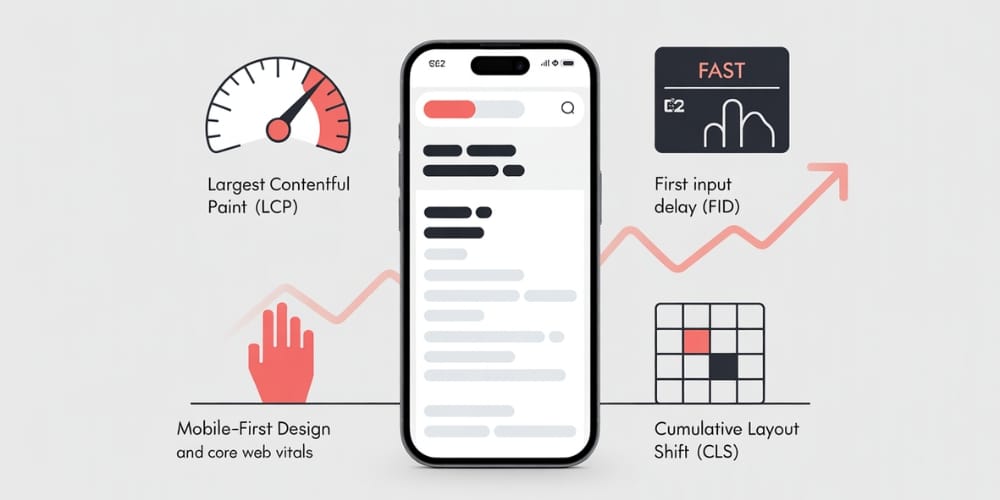
For businesses in Nepal looking to grow their online presence, the case for a mobile-first redesign is straightforward. When UX improvements and SEO best practices are built into the redesign process together rather than bolted on separately, the result is a website that performs on every front: higher search visibility, lower bounce rates, and a user experience that converts browsers into customers. In Nepal’s fast-evolving digital market, that kind of strategic redesign isn’t a luxury; it’s a competitive necessity.
Modern SEO Practices Boost Visibility in Competitive Local Searches
Most outdated websites share the same hidden problems: missing schema markup, weak internal linking, bloated or unoptimized URLs, and content that search engines can’t meaningfully index. A strategic website redesign is the most effective opportunity to fix all of it at once, replacing those gaps with current best practices that actually move the needle in local search rankings.
For businesses in Nepal, that means building a site with fast Core Web Vitals, mobile-optimized pages, and location-specific content that targets high-intent searches like “best digital marketing agency in Kathmandu” or “affordable web design services in Nepal.” These aren’t vanity rankings, they’re the searches your ready-to-buy customers are already making.
But modern SEO doesn’t stop at technical fixes. Search engines like Google increasingly evaluate how users behave on your site, how long they stay, how easily they find what they need, and whether they leave satisfied. A redesign that streamlines navigation, clarifies calls-to-action, and structures content around user intent naturally improves these signals, creating a compounding effect on visibility over time.
The businesses winning local search in Nepal aren’t doing SEO and UX separately ,they’re doing them together. A redesign that treats technical optimization and user experience as one unified goal doesn’t just climb search rankings, it earns them by building a site that genuinely serves its audience better than the competition.
Higher Conversion Rates Turn Visitors into Paying Customers
Getting traffic to your website is only half the battle; what happens after someone lands on your page determines whether you get a customer or a missed opportunity. A strategic website redesign in Nepal targets exactly that gap, optimizing every touchpoint that influences a visitor’s decision to act.
The levers are more specific than most businesses realize. Smarter button placement, simplified inquiry forms, faster load times, and clearly stated value propositions all reduce the friction standing between a visitor and a conversion. Add trust-building elements, client testimonials, certifications, recognizable partner logos, and you give hesitant buyers the confidence to follow through. These aren’t cosmetic changes; individually modest, they compound into conversion rate improvements of 20–100% or more.
For Nepali e-commerce stores, service providers, and local retailers, the stakes are particularly tangible. More conversions from the same traffic means more bookings, more inquiries, and more sales without increasing your marketing spend. A redesign that fixes a leaky conversion funnel effectively multiplies the return on every rupee already going into customer acquisition.
The best website redesigns don’t just look better, they perform better at every stage of the customer journey. From the first impression to the final checkout step, a conversion-focused redesign turns your website from a digital brochure into your most reliable sales tool.
Stronger Brand Credibility Builds Trust in a Competitive Market
In Nepal’s growing digital economy, your website is often the first and sometimes only impression a potential customer has of your business. An outdated design, broken pages, or inconsistent branding doesn’t just look unprofessional; it actively hands customers to competitors who’ve invested in their online presence.
A strategic redesign closes that gap. When visuals, messaging, and user experience are aligned and intentional, visitors read your site as a signal of how you operate as a business, attentive, reliable, and worth trusting. For markets like Nepal, where word-of-mouth and reputation carry significant weight, that perception translates directly into customer confidence and purchasing decisions.
Credibility is also built through the details most visitors never consciously notice: consistent typography, a coherent colour language, messaging that speaks to local context, and a site structure that makes finding information effortless. When these elements work together, they don’t just reflect your brand, they reinforce it at every scroll and click.
In a marketplace where customers have more choices and less patience than ever, a polished and purposeful website isn’t a branding luxury. It’s the foundation that makes every other marketing effort, such as social media, paid ads, and referrals more effective by ensuring that when people arrive, they stay, trust, and convert.
Long-Term Cost Savings and Scalability for Future Growth
A website redesign is often framed as an expense — but the more accurate way to look at it is as the cost of avoiding far larger ones down the road. Outdated sites accumulate risk: security vulnerabilities, compatibility failures with newer devices and browsers, and technical debt that eventually demands expensive emergency intervention. Addressing these proactively through a strategic redesign is almost always cheaper than reacting to them after the fact.
Built on a modern CMS like WordPress and Frameworks like MERN with a reliable hosting infrastructure, a well-executed redesign also dramatically reduces the ongoing cost of keeping your site current. Updates that once required a developer can be handled in-house. New pages, product listings, or blog content can be added without rebuilding from scratch every time. The site grows with your business rather than holding it back.
Scalability extends beyond the website itself. A properly redesigned site integrates cleanly with the tools that drive modern business growth, CRM platforms, email marketing systems, analytics dashboards, and social media channels, turning your website into the connected hub of your digital operations rather than an isolated asset.
For Nepali businesses planning for sustained growth, this foundation matters. Whether you’re expanding to new markets, launching new services, or scaling your team, a site built with future flexibility in mind means your digital infrastructure supports your ambitions instead of creating friction at every step.
Ready to See What a Website Redesign Can Do for Your Business?
Every section of this guide points to the same conclusion: a strategic website redesign isn’t a single improvement; it’s a multiplier across every dimension of your digital performance. Better search rankings, stronger brand credibility, higher conversions, and a scalable foundation for growth. For Nepali businesses competing in an increasingly digital market, 2026 is the right time to make that move.
At Gripas Marketing, we specialize in building modern, SEO-optimized, mobile-first websites designed specifically for Nepal’s market. We understand local search behaviour, the devices your customers use, and the trust signals that convert Nepali audiences — and we bring that understanding into every redesign we deliver. Whether you’re starting from scratch, overhauling an underperforming site, or looking for ongoing website management, we build with your long-term growth in mind.
Start with a website performance audit. We’ll identify exactly where your current site is losing traffic, trust, and conversions and show you what a strategic redesign could realistically achieve for your business.
Frequently Asked Questions (FAQs)
How do I know if my business website needs a redesign or just minor updates?
If three or more warning signs from this guide apply to your site, declining rankings, poor mobile performance, or low conversions, a strategic redesign will deliver far better long-term results than incremental fixes.
How long does a website redesign typically take?
A standard business website redesign takes four to eight weeks, while larger or more complex projects can run three to six months, depending on scope and functionality required.
Will a website redesign affect my current SEO rankings?
A strategically executed redesign with proper 301 redirects, preserved content, and improved technical performance will protect your existing SEO equity and strengthen your rankings over time, not harm them.
Do I really need a mobile-first website if I already have a mobile-responsive site?
Mobile-responsive and mobile-first are not the same thing, and with over 85% of Nepal’s internet traffic coming from mobile devices, a site purpose-built for smartphones will significantly outperform a desktop design that simply scales down.
Why should I choose Gripas Marketing for my website redesign in Nepal?
Gripas Marketing delivers mobile-first, SEO-optimized redesigns built specifically for the Nepali market, backed by a free website performance audit so every project starts with clear, data-driven goals.