Discover the Latest Digital Marketing Trends Shaping Nepal’s Digital Landscape
Nepal’s digital economy crossed a tipping point in 2026. Internet penetration now sits between 70 – 78% smartphone usage continues to climb, and platforms like TikTok, Instagram Reels, and Facebook have become the primary discovery channels for everything from apparel to travel packages.
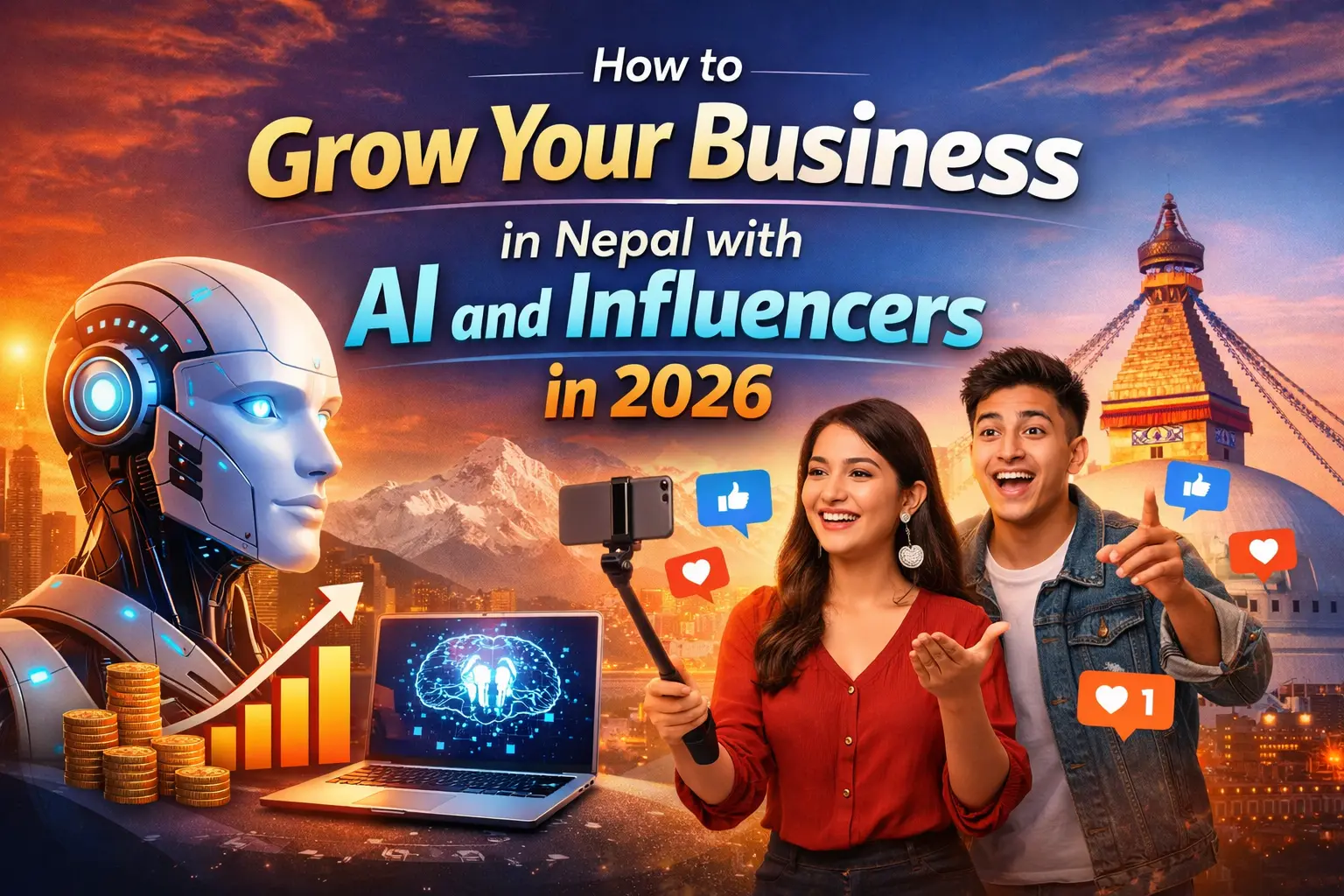
But reach alone no longer wins. Organic visibility is shrinking across every major platform. The brands pulling ahead from tour operators to Kathmandu fashion labels – are combining three things: AI-driven personalization, trust-based influencer partnerships, and content that actually converts. This article breaks down exactly how they’re doing it, with tactics you can apply to your own business today.
Key Takeaways
- AI personalization tools increase conversion rates by 2–3x by targeting users based on real behavioral signals
- Micro and nano-influencers (10K–100K followers) in Nepal deliver 8–10x higher engagement than mega-influencers.
- Short-form video combined with educational blog content forms the most effective lead funnel in 2026
- Brands using all three strategies together – AI + influencers + content – report up to 200% lead growth year-on-year
- Local payment integrations (eSewa, Khalti) and Nepali-language content are key differentiators that generic campaigns overlook.
Table of Contents
Why 2026 Is a Turning Point for Lead Generation in Nepal
Three years ago, running a Facebook ad campaign was enough to generate consistent leads. Today, that same ad competes with thousands of others fighting for the same feed space – and audiences have learnt to scroll past anything that doesn’t immediately feel relevant or trustworthy.
Nepal’s e-commerce sector, anchored by platforms like Daraz and a growing ecosystem of direct-to-consumer brands, is generating more digital transactions than ever. But conversion rates tell a different story: brands relying solely on traditional digital ads are seeing rising costs per lead and declining return on ad spend.
The solution isn’t spending more. It’s spending smarter – by using AI to target the right people, partnering with voices those people already trust, and building content that answers real questions.
AI-Powered Lead Generation: What’s Actually Working in Nepal Right Now
Most businesses we speak to in Kathmandu think AI marketing means using ChatGPT to write captions. That’s the surface. The brands seeing real lead growth are using AI at three specific points in their funnel — and the difference in results is significant.
The three layers that matter:
The first is behavioral segmentation — grouping website visitors and social media audiences by what they actually do, not just their demographics. A 28-year-old in Lalitpur who browsed three trekking packages and abandoned the inquiry form is a fundamentally different lead than someone who spent 20 seconds on the homepage. AI tools can separate these automatically and serve each a different message.
The second is predictive lead scoring — ranking incoming inquiries by their likelihood to convert based on past data. This matters most for businesses getting 50+ inquiries per month who can’t follow up on all of them equally. Score the leads, prioritize the top 20%, and response time drops from 24 hours to under 2 — which, in our experience running campaigns for Nepal-based clients, is where the biggest conversion gains come from.
The third is 24/7 automated capture — chatbots that qualify visitors outside business hours. Nepal’s tourism and hospitality sector loses a measurable volume of leads simply because inquiries come in at 10pm and receive a response the next morning. By then, the visitor has already contacted two competitors.
How this looks in practice:
One of our clients , a trekking operator based in Thamel – was receiving an average of 40 website inquiries per month but converting fewer than 6. After implementing a Freshchat chatbot with 4 qualifying questions (travel dates, group size, budget range, experience level), a lead scoring system that flagged high-intent visitors, and a same-day email sequence for hot leads, their monthly bookings from web traffic increased to 14 within 90 days. No additional ad spend. Same traffic, better system.
The Nepal-specific layer most tools miss:
Generic AI marketing tools are built for markets where English is the primary language and Stripe is the default payment method. Nepal is neither. The setup decisions that matter here are:
- Chatbot flows in Nepali (not just translated — written natively, because translated Nepali reads awkwardly and users drop off)
- Payment integration with eSewa and Khalti at the conversion step, not as an afterthought
- WhatsApp as the primary follow-up channel, not email — open rates on WhatsApp in Nepal run significantly higher than email for local audiences
These aren’t optional add-ons. They’re the difference between a tool that works in theory and a funnel that converts in practice
Ready to Future-Proof Your Website in Nepal’s 2026 Digital Landscape?
Stay ahead of Nepal’s changing digital landscape with a strategy built for 2026. Connect with our team to turn trends into measurable results for your business.
Influencer Marketing in Nepal: Why Smaller Audiences Are Winning More Business
Here’s something that surprises most of our clients when we show them the data: a Nepali lifestyle creator with 35,000 followers will almost always outperform one with 350,000 for direct lead generation. Not because bigger is worse, but because the relationship dynamic is completely different, and in Nepal’s market specifically, relationship is everything.
Duration over one-off posts.
A single sponsored post creates a spike and fades. A three-month partnership where a creator genuinely integrates a product into their regular content builds accumulated trust that actually changes purchasing decisions. We’ve seen brands with no paid ad budget generate their highest-quality inquiries exclusively through sustained creator partnerships.
Niche fit over audience size.
The highest-ROI influencer campaigns we’ve run in Nepal have been in trekking and adventure travel, local food, personal finance, and fashion categories where the creator’s audience has a direct interest in the product. A trekking gear brand partnering with a finance creator gets views. The same brand partnering with a trekking vlogger with half the audience gets customers
Content That Actually Converts: The Two-Layer System
Content in 2026 works best as a two-layer system. Short-form video handles discovery TikTok, Instagram Reels, and YouTube Shorts put your brand in front of new audiences at low cost.
Long-form content handles conversion blog posts, guides, and webinars answer the deeper questions that turn a curious viewer into an actual inquiry.
The brands getting this right are not choosing one or the other. They’re running both in parallel, with each layer feeding the next.
Short-form video: what works in Nepal
- 30–90 second videos demonstrating products or documenting real customer experiences
- Behind-the-scenes content that shows the people behind the brand — especially effective for service businesses
- “Did you know?” formats that teach something useful — these get saved and shared, which extends organic reach
- Nepali-language captions alongside English — this alone measurably increases watch time and saves for local audiences
Long-form content: where inquiries actually come from
- Case studies with real numbers from real clients — the single most trusted content format for professional services buyers
- Blog posts targeting specific search queries — “best trekking packages from Kathmandu 2026”, “how to use eSewa for online shopping”
- Downloadable lead magnets: Nepali-language checklists, free audit templates, buyer guides that capture email addresses
The Integrated Funnel: Where All Three Come Together
The businesses generating the most consistent inquiries in Nepal right now aren’t running these three strategies in silos. They’re running them as a connected system:
Stage 1 — Discovery (Influencers + Short-form Video):
A micro-influencer posts an authentic Reel featuring your product or service. New viewers land on your profile or website for the first time.
Stage 2 — Nurturing (AI Personalization):
A visitor who clicked through is cookied. AI-powered retargeting shows them relevant content over the next 7–14 days. An automated email sequence delivers useful content that addresses common objections.
Stage 3 — Conversion (Content + Lead Capture):
The nurtured prospect lands on a blog post or landing page that answers their specific question. A lead magnet — free consultation, downloadable guide, discount code — captures their contact details.
Stage 4 — Retention (Content + AI):
Post-conversion, automated sequences keep customers engaged, encourage repeat purchases, and turn satisfied buyers into referral sources.
This loop, once built and optimized, generates qualified inquiries continuously and cost-efficiently — even for small teams.
Real Applications by Industry in Nepal
Apparel and Retail:
AI segmentation by age, gender, and purchase history combined with micro-influencer collaborations for seasonal launches. Retargeting campaigns that follow window shoppers with the exact product they viewed, paired with a limited-time offer.
Tourism and Hospitality:
AI chatbots handling initial booking inquiries 24/7 plus influencer-led trek documentation that doubles as authentic social proof. Destination guides optimized for search that capture email addresses before the traveler books.
E-commerce:
Predictive scoring to identify repeat-purchase potential plus content series targeting post-purchase moments , care guides, how-to videos, community building that increase lifetime value.
Professional Services:
Long-form educational content targeting high-intent queries plus AI-qualified inquiry forms that route hot prospects directly to the sales team.
Conclusion
In 2026, the gap between brands generating consistent business growth in Nepal and those that are struggling comes down to three things: whether they’re using AI to personalize at scale, whether they’re building trust through authentic influencer relationships, and whether their content is actually answering the questions their customers are asking.
None of these require a large budget to start. They require a clear strategy, consistent execution, and a willingness to measure what’s working and double down on it
Frequently Asked Questions (FAQs)
How do Nepali brands use AI for lead generation in 2026?
The most effective applications are AI chatbots for around-the-clock inquiry capture, behavioral segmentation for personalized ad targeting, and predictive lead scoring to prioritize high-intent prospects. When integrated with local payment platforms and Nepali-language support, these tools typically increase conversion rates by 2-3x compared to generic campaigns.
Is influencer marketing still effective in Nepal?
Yes , but the format has changed. Celebrity endorsements and mega-influencer campaigns are declining in ROI, while micro and nano-influencer partnerships with genuine local audiences are delivering stronger results. Long-term partnerships built on authenticity consistently outperform one-off paid posts
What content types generate the most inquiries in Nepal in 2026?
Short-form video on TikTok and Instagram Reels drives the most top-of-funnel discovery. Educational blog posts, free guides, and downloadable checklists in Nepali convert that attention into real inquiries.
Can small brands in Nepal compete with large ones using these strategies?
This is actually where small brands have an advantage. AI personalization automates what previously required large teams. Local micro-influencers give smaller brands authentic reach that large brands with generic campaigns struggle to replicate. Acting early on these strategies compounds into a significant competitive advantage
What is the role of Nepali language content?
Significant. Content in Nepali builds trust with audiences who don’t engage primarily in English, expands reach beyond urban professional demographics, and signals genuine local understanding. Lead magnets, chatbot flows, and landing pages in Nepali consistently outperform English-only equivalents for local audience segments